How to Build a Practical Coffee Cleaning Schedule for Better Brews
Why Your Coffee Equipment Deserves More Than a Rinse
I have been making coffee at home for over a decade, and for most of that time I treated my gear like it was invincible. A quick rinse under the tap, a wipe with a dish towel, and I called it clean. But after a few months, my espresso started tasting dull, my pour-over dripped slower, and my French press left a gritty film in every cup. That is when I learned the hard way that coffee oils, mineral deposits, and fine particles build up quietly, day after day, and they steal flavor and performance long before you notice.
Cleaning coffee equipment is not glamorous, but it is the single most impactful habit you can develop for consistent, delicious coffee. The challenge is knowing what to clean, how often, and with what method. Overwhelm is real when you see different advice for every brewer. That is why I put together a practical coffee cleaning schedule sessioncoffeedenver that fits into real life, not a fantasy where you scrub everything daily. This approach balances effort with results and keeps your coffee tasting fresh without turning your kitchen into a lab.
Understanding the Two Types of Residue
Before we talk schedules, it helps to understand what you are fighting. Coffee residue comes in two main forms. The first is coffee oil and spent grounds, which are organic and can turn rancid over time. The second is mineral scale, mostly calcium and magnesium, which deposits from water as it heats and evaporates. Each requires a different cleaning agent and frequency.
Oily residue responds well to mild dish soap, warm water, and a good scrub. Scale, on the other hand, needs an acid-based descaling solution, usually citric acid, acetic acid (white vinegar), or a commercial descaler. Using soap on scale does almost nothing, and using descaler on oil leaves a chemical taste. A good routine addresses both separately.
Daily Habits That Take Two Minutes
Most of the heavy lifting in a cleaning schedule happens in the first two minutes after brewing. If you let wet coffee sit in a portafilter, a carafe, or a brew basket, oils oxidize and stick harder. A quick rinse under hot water right after you pour your cup removes ninety percent of the residue before it sets. For espresso machines, that means knocking out the puck, rinsing the portafilter and basket, and running a short flush through the group head. For drip machines, empty the carafe and rinse the brew basket. For pour-over, discard the filter and rinse the dripper.

Do not use soap on every daily rinse. Soap can leave a residue that affects taste, and coffee oils actually protect metal surfaces between deep cleans. Hot water alone is enough for daily maintenance. If you brew multiple times a day, a rinse after each session keeps things fresh.
Weekly Deep Cleaning for Key Parts
Once a week, set aside ten minutes for a deeper clean. This is where you break down removable parts and scrub them with a soft brush and mild soap. For an espresso machine, that means removing the shower screen and gasket if you are comfortable, or at least scrubbing the group head with a nylon brush. Wipe down the steam wand after every use, but once a week, purge it thoroughly and wipe with a damp cloth to remove milk protein buildup.
For a drip coffee maker, weekly cleaning involves washing the carafe with soap and a non-abrasive sponge, and scrubbing the brew basket. If your machine has a reusable filter, give it a good scrub too. For French press, disassemble the plunger and clean the mesh thoroughly; grounds get trapped in the rim and cause bitterness if left. For pour-over drippers, a weekly scrub with soap removes the thin oil film that rinsing alone cannot shift.
I used to skip weekly scrubs because I thought rinsing was enough. But after a month, the difference was obvious. My espresso had more clarity, my drip coffee did not taste stale by mid-afternoon, and my gear looked new for longer. A practical coffee cleaning schedule sessioncoffeedenver treats weekly cleaning as a non-negotiable, but keeps it simple enough that you actually do it.
Monthly Descaling Protects Your Investment
Descaling is the step most people neglect until their machine starts sputtering or their kettle takes forever to boil. Scale builds up silently and acts as an insulator, making your machine work harder and heat unevenly. Over time, it can clog valves and ruin heating elements. For most home brewers, a monthly descale is enough unless your water is very hard. If you see white flakes in your water or on your kettle element, move to every two weeks.
To descale an espresso machine, fill the tank with a descaling solution mixed per instructions, run it through the brew cycle and steam wand, then flush with fresh water several times. Always check your manufacturer's guidance because some machines require specific products. For a drip coffee maker, run a full cycle with descaling solution, then two cycles with clean water. For a gooseneck kettle, let the solution sit for fifteen minutes and rinse well.
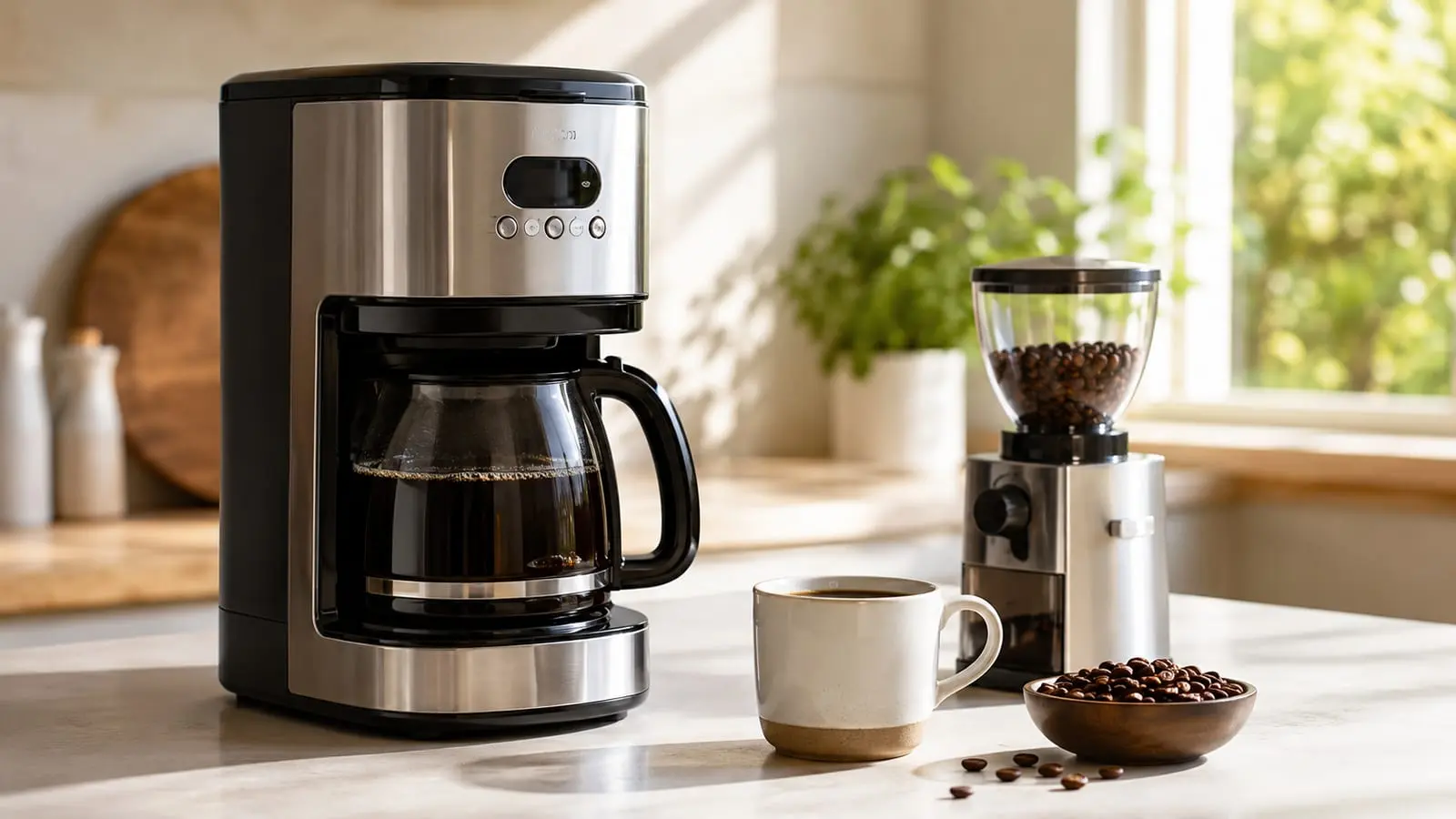
Vinegar works, but it has a strong smell and can damage rubber seals if used too often. I prefer a citric acid based descaler because it is effective and nearly odorless. The trade-off is cost, but a bottle lasts months for a single user. The investment is worth it when you consider replacing a machine costs hundreds.
Quarterly Maintenance That Extends Life
Every three months, take a closer look at parts that wear out. Replace your espresso machine's group gasket if it shows cracks or leaks. Check your burr grinder for oil buildup on the burrs; a brush and a few grains of uncooked rice can help clean stubborn residue (check your grinder's manual first, because some manufacturers advise against rice). Clean the grinder's chute and doser if it has one. For drip machines, replace the charcoal filter if you use one.
This is also a good time to inspect your water. If you use tap water, a simple hardness test strip tells you whether your descaling frequency is right. If you use filtered or bottled water, you might descale less often. Adjust your schedule accordingly rather than sticking blindly to a calendar.
Building a Routine That Sticks
The best schedule is the one you actually follow. I have tried elaborate systems with checklists and apps, but they always fizzled out. What worked for me was tying each cleaning task to a habit I already had. Daily rinse happens while my coffee is brewing, because I am already at the sink. Weekly scrub happens on Saturday morning when I have a few minutes before I start my day. Monthly descale goes on my phone calendar with a reminder. That is the core of a practical coffee cleaning schedule sessioncoffeedenver: it fits into your existing flow instead of adding a separate chore.
Another trick is to keep your cleaning tools accessible. A small brush, a dedicated sponge, and a bottle of descaler stored near your coffee station make it easy to act when you see the need. If your cleaning supplies are in a cupboard across the kitchen, you are less likely to bother.
The Payoff Is in the Cup
At Session Coffee Denver, we believe that great coffee starts with clean gear. Every time I taste a muddy shot or a flat pour-over, I ask myself when I last cleaned the grinder or descaled the machine. Nine times out of ten, the answer reveals the cause. A clean machine does not guarantee a perfect brew, but a dirty one guarantees a compromised one.

If you are new to coffee or a seasoned home barista, take a moment to look at your equipment right now. Do you see oily residue on your portafilter? Is your kettle spout crusted with white scale? Those are signs that your routine needs a small upgrade. You do not need to overhaul everything at once. Start with a daily rinse. Add a weekly scrub next week. Then schedule your first descale. Over a month, those small steps become automatic, and your coffee will taste noticeably better.
Your gear is an investment in your daily ritual. Treating it with a consistent, practical cleaning schedule protects that investment and ensures every cup you make is as good as the beans and skill you bring to it.
Follow Session Coffee Denver on
 Pinterest